
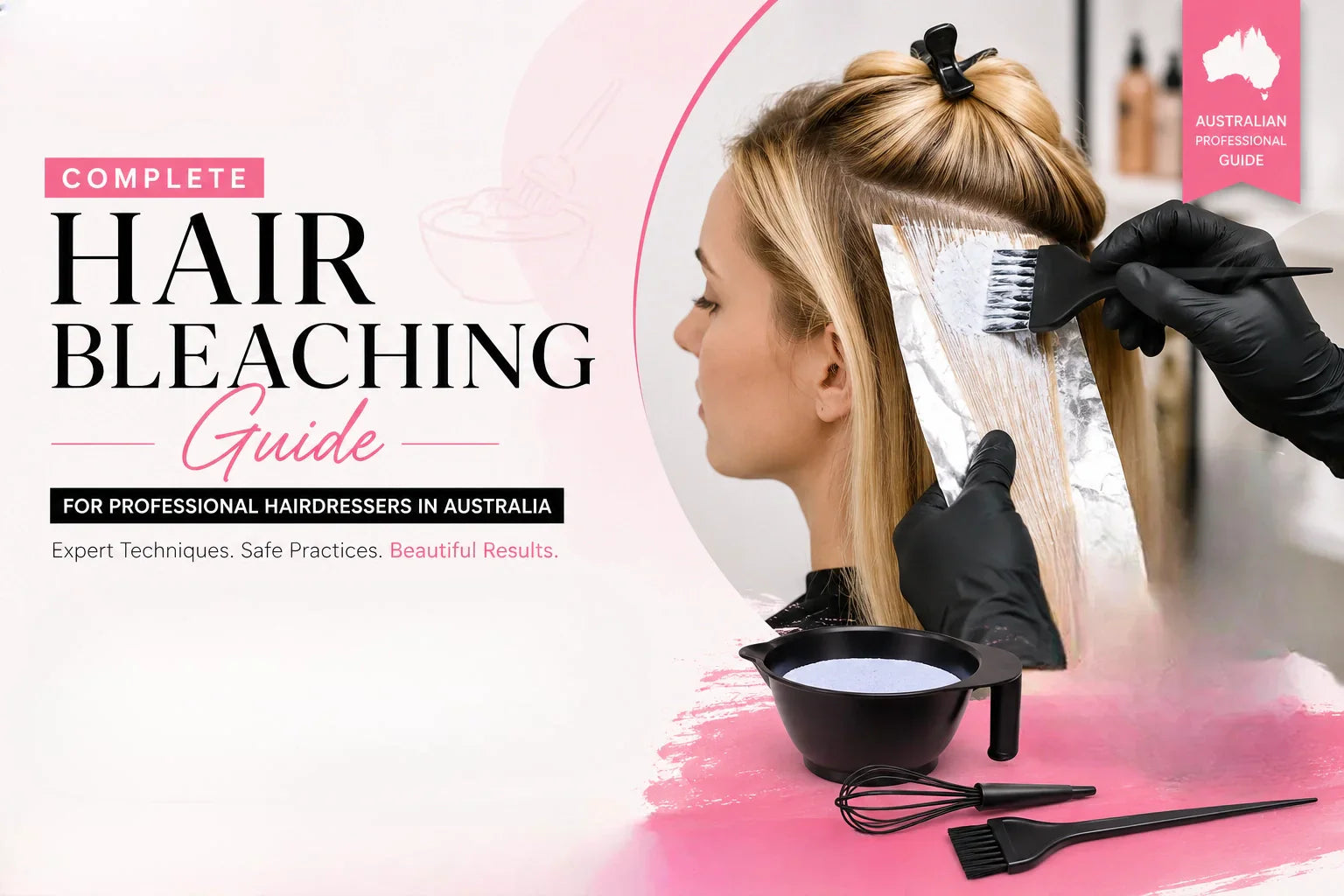
Every hairdresser knows that blonde hair is always in demand. Whether creating platinum blondes, bright foils, or sun-kissed balayage, using the right professional hair bleach and salon techniques is essential for achieving safe, predictable results.
This practical hair bleaching guide for hairdressers breaks down how to use professional hair bleach, master modern salon bleaching techniques, and always bleach hair safely.
1. The Power of Consultation and Hair Analysis
Before you even touch a mixing bowl, you must check the hair properly. Never skip a deep strand test and a quick hair history chat. Australian weather is harsh. The intense sun, salty ocean water, and swimming pool chlorine can leave hair highly porous and dry before any bleach even touches it.
Ask your client these simple questions first:
-
What box dyes or permanent colours have you used in the last 2 to 3 years?
-
Do you swim a lot or spend hours under direct sunlight?
-
Have you ever had chemical straightening or a keratin treatment done?
Always run an elasticity test. Wet a few strands of hair and stretch them gently. If the hair stretches and goes back to its original shape, it is healthy enough. If it stretches and snaps easily, or feels soft and mushy, do not bleach it today. Instead, tell them to get a few deep protein and moisture salon treatments first.
2. Choosing the Right Professional Hair Bleach and Developer
To get clean, predictable lifting results, you need high quality bleach products and professional salon supplies designed for consistent lifting and hair protection.
Selecting Your Powder
-
Blue or Violet Bleach: Many salons across the country prefer premium bleaching powder Australia professionals trust for reliable lifting performance and reduced swelling during processing.
-
White Bleach: Ideal when you need to accurately monitor the lifting process and assess the underlying pigment during bleaching.
-
Clay Bleach: Made specifically for open-air balayage. It dries up on the outside so it won't touch other hair, but it stays wet and active on the inside.
Choosing Your Developer Strength
Never rush a job by using high developers right away. A lower developer working slowly will always give you a cleaner, healthier blonde.
-
10 Vol (3%): Best for fragile hair, fine hair, or when you only need a soft 1 to 2 level lift.
-
20 Vol (6%): The absolute standard for most salon bleaching techniques. Excellent for regular on-scalp applications and standard foiling.
-
30 Vol (9%): Use this with care on thick, coarse, dark hair. Never apply 30 Vol directly onto the scalp.
-
40 Vol (12%): Avoid this on the scalp entirely. Most modern educators suggest staying away from 40 Vol completely to protect hair elasticity.
3. Mixing and Application Rules
Accuracy is everything in a busy salon. Always use professional hair colour tools such as digital scales, tint brushes, mixing bowls, and sectioning clips to ensure accurate mixing and application. Guessing the ratio creates a mixture that is either too runny (causing lines and foil leaks) or too thick (which dries out and stops lifting).
A standard mixing ratio is 1:1.5 or 1:2. Mix it smoothly until it looks like thick yoghurt.
Step-by-Step Salon Bleaching Techniques
To get seamless results, follow this simple, clean routine:
-
Section the Hair Cleanly: Divide the hair into 4 simple parts: front to back, and ear to ear. This keeps your work neat and stops bleach from touching unwanted sections.
-
Take Fine, Paper-Thin Slices: If your sections are too thick, the bleach cannot soak the middle strands. This leaves dark, warm patches. Work with fine slices that you can see right through.
-
Apply to Mid-Lengths and Ends First: The heat from the scalp makes the first 1 to 2 centimetres of hair lift much faster. This causes "hot roots." Always apply product to the mid-lengths and ends first. Once those parts start to lift, go back and paint the roots.
-
Do Not Overlap Old Bleach: When doing a root retouch, do not paint over previously lightened hair. Overlapping creates a chemical line where the hair will eventually break.
4. Processing Time and Toning
Never leave a client alone while their hair is processing. Check your foils every 10 to 15 minutes.
Quick Tip: Professional bleach stops working once it dries out. If a section is lifting slowly because it looks dry, wipe away the old product gently with a dry towel and put a fresh, wet batch right over it.
Do not just rely on a timer. Wash the hair based on what you see. Once the target underlying pigment is reached, rinse the hair thoroughly with lukewarm water.
Toning for the Perfect Finish
Bleaching only takes away the natural pigment. Toning creates the final beautiful shade.
-
If the hair lifts to a pale yellow (like the inside of a banana skin), use a violet-based toner to get a crisp platinum or ash blonde.
-
If the hair has a stronger yellow hue, a soft pearl or beige toner will give a natural, creamy sandy blonde look that Australian clients love.
5. Post-Bleach Care and Salon Protection
To ensure you bleach hair safely, always use a bond-building additive in your mixture. These products rebuild broken disulphide bonds during the harsh lifting process.
Once you rinse the bleach and toner, apply an acidic post-colour shampoo and treatment. This lowers the hair's pH level, closes the cuticle, and seals in the new colour tone.
Even the best salon bleaching results depend on proper aftercare. Educate your client that home care is just as critical as salon work.
Successful blonding is about more than simply lifting colour. By using quality professional hair bleach, trusted bleach products, and the right hair colour tools, hairdressers can create brighter, cleaner blondes while protecting hair health, improving client satisfaction, and achieving consistent salon-quality results.
Shop the products in this guide
Everything this bleaching guide covers, from lightener to toner, is available for Australian salons below.
- Professional hair bleach and lighteners – dust-free blue, violet and white powders and a clay lightener
- Developers in 10, 20, 30 and 40 volume – creme developers to match your lightener and lift
- Hi Lift Cureplex bond-building system – Bond Creator, Bond Fortifier and aftercare for lightening services
- Redken Shades EQ toners – acidic demi-permanent gloss shades for toning after lightening
- Colour tools for mixing and application – tint bowls, brushes, measuring cups and timers
- Professional hair foils – pre-cut, pop-up and roll foils for lightening work